
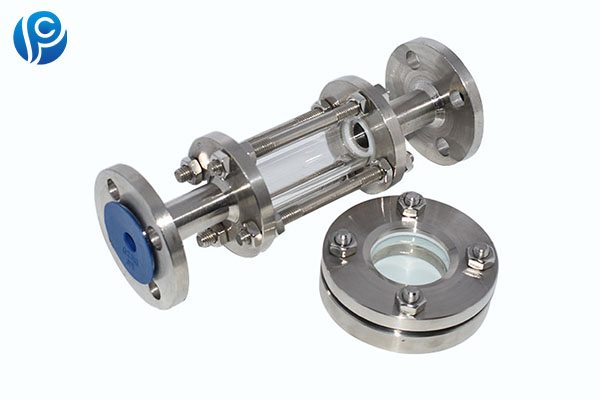
How Are Shaped Glass Tubes Manufactured?

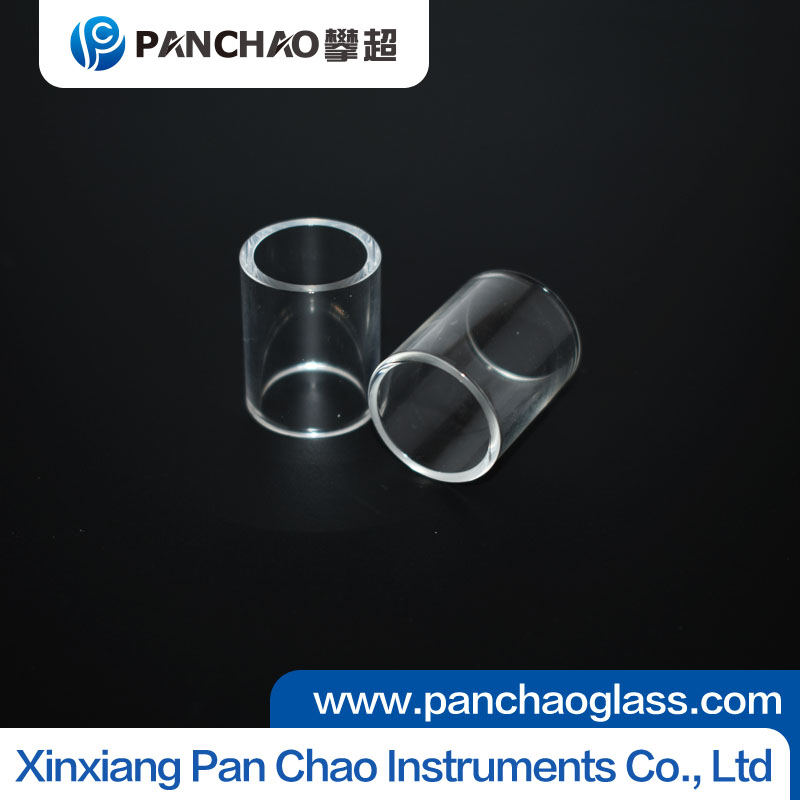
Shaped glass tubes, also known as custom or formed tubes, are essential components in industries ranging from medical devices to semiconductor manufacturing. Unlike standard cylindrical tubes, shaped tubes have non-circular cross-sections—such as oval, square, or polygonal shapes—or complex profiles. Here is how these specialized products are made.
The Forming Process
The manufacturing process for shaped glass tubes begins with a preform, a glass tube or rod of the desired material. The preform is heated to a temperature where it becomes soft and workable, typically around 800-1000°C for borosilicate glass. This is often done using a continuous furnace or a localized heating method such as an oxy-hydrogen flame.
Once the glass reaches the appropriate temperature, it is shaped using various methods. For simpler shapes, the heated tube is drawn through a die. The die has the desired cross-section, and as the glass is pulled through, it takes on the shape of the die. This method is suitable for producing long, continuous lengths of shaped tubing.
For more complex profiles, the glass can be formed using a mandrel—a rod or form with the desired shape—over which the glass is pressed or drawn. This allows for more complex internal geometries.
Hot Forming Techniques
Several hot forming techniques are used to create shaped glass tubes, depending on the complexity of the shape and the material.
Drawing is the most common method for producing shaped tubes. The heated preform is pulled through a die while air pressure is used to maintain the tube's internal shape. The draw rate and temperature are precisely controlled to achieve the desired wall thickness.
Pressing involves placing a heated glass preform into a mold and pressing it into the desired shape. This method is suitable for shorter lengths and more complex shapes.
Blow molding is used for creating hollow glass forms. A heated glass tube is placed in a mold, and air is blown into it to expand the glass to the shape of the mold.
Annealing: Stress Relief
After shaping, the glass is subjected to a controlled cooling process known as annealing. This relieves internal stresses that may have developed during the forming process. The tube is gradually cooled to room temperature, ensuring that it maintains its shape and mechanical integrity. Improper annealing can lead to cracking or warping, which can be a problem for shaped tubes.
Quality Control and Precision
Shaped glass tubes often require tight tolerances, particularly for applications such as medical devices or semiconductor components. Manufacturers use advanced measurement systems to verify the dimensions. Laser interferometry provides accuracy of ±0.2 micrometers, ensuring the final product meets specifications.
The Bottom Line
Shaped glass tubes are manufactured through a combination of controlled heating, mechanical forming, and precise annealing. The process begins with a heated preform, which is shaped using dies or molds, and then carefully cooled to relieve internal stress. The result is a high-quality, custom-shaped tube that meets the demanding requirements of modern applications. As technology advances, the capabilities of shaped glass tube manufacturing continue to expand, enabling new and innovative applications across industries.

Related articles
- How to Control Dimensional Accuracy in Custom Glass Tube Manu
- What Parameters Are Needed for Custom Sight Glass?
- How to Choose Between Round and Rectangular Sight Glasses
- What Are the Key Features of Explosion-Proof Sight Glass?
- How to Select the Right Sight Glass for Pressure Vessels
- The Difference Between Transparent and Opaque Quartz Glass
- How Quartz Glass Purity Affects Product Performance
- Tempered Glass vs. Quartz Glass: How to Choose
- Transparency and Purity: Key Indicators of Quartz Glass
- How to Improve the Impact Resistance of Sight Glass

Xinxiang Pan Chao Instruments Co., Ltd.
Tel: +86 13343800331
Contact person:Carrie Niu
Fax: 0373 303 0331
Email:sales@panchaoglass.com
