
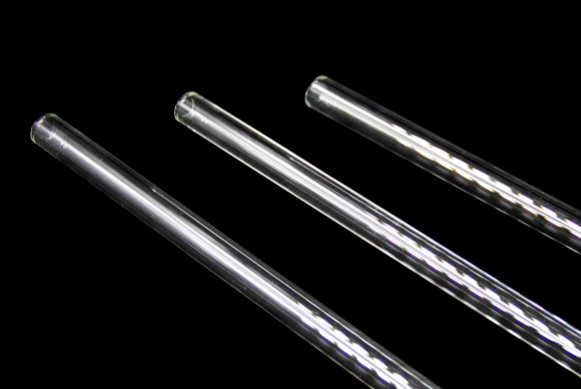
Why Do Glass Tubes Need "Flame Polishing" After Cutting?

After a glass tube is cut, its freshly severed edge is typically sharp, uneven, and filled with micro-cracks. These imperfections are not just a nuisance; they are stress concentration points that can cause the tube to crack spontaneously during subsequent processing or use. Flame polishing transforms this rough edge into a smooth, strong, and safe surface. Here is why this step is essential.
The State of a Cut Edge
When a glass tube is cut—whether by a diamond saw, a laser, or a thermal scoring method—the edge is left with a characteristic rough finish. This surface is composed of jagged ridges and micro-cracks. These are invisible to the naked eye but significant at the microscopic level.
These micro-cracks are the starting points for potential failure. Under thermal or mechanical stress, a crack can propagate, leading to a catastrophic failure of the entire tube. Even if the tube does not break immediately, the sharp edges are a safety hazard for anyone handling the glass.
The Flame Polishing Process
Flame polishing addresses these issues by using heat to melt and reflow the glass surface. The cut end of the tube is passed through a high-temperature flame, typically an oxygen-hydrogen flame. The flame is directed at the cut edge, heating it to a temperature close to the softening point of the glass (around 800°C for borosilicate glass). At this temperature, the surface layer of the glass melts and becomes fluid.
The surface tension of the molten glass then naturally pulls the material into a smooth, rounded profile. Any sharp corners or jagged edges are eliminated as the glass flows and re-solidifies.
Benefits of Flame Polishing
Flame polishing offers several important benefits. Elimination of Micro-Cracks is the most critical, as the melting process removes the stress points that can cause fractures. It also creates a Smooth, Rounded Edge, greatly reducing the risk of cuts and making the tube safer to handle. The sealed surface is less likely to allow cracks to propagate during thermal cycling, which is essential for any application involving temperature changes.
The result is a Clean, Aesthetically Pleasing Finish, which is often required for high-quality laboratory glassware and sight glasses.
Considerations and Limitations
Flame polishing must be performed with control. Overheating can cause the glass to deform or sag. It also requires a flame with a precise, clean heat source to avoid contamination. The process is not generally applicable to all glass types; while effective on borosilicate and quartz, soda-lime glass is more prone to thermal stress and may need a more delicate approach.
The Bottom Line
Flame polishing is a critical finishing step for cut glass tubes. It transforms a dangerous, fragile edge into a safe, robust, and reliable surface. By melting and reflowing the cut surface, it eliminates micro-cracks, rounds sharp corners, and prepares the tube for its intended application. In the world of glass, a properly polished edge is a fundamental requirement for safety and performance.

Related articles
- How Are "Striae" and "Bubble" Defects Controlled in O
- From Sand to Tube: The Raw Materials and Melting Process of B
- What Wall Thickness Tolerances Can Be Achieved for Custom Gla
- How Is "Internal Stress" in Glass Tubing Created? — A C
- How to Improve the Service Life of Industrial Sight Glasses
- What Drawing Parameters Are Required for Custom Quartz Glass
- Why Is Borosilicate Glass Tubing Ideal for Laboratory Use?
- Quartz Glass vs. Borosilicate Glass: Which Is More Heat-Resis
- Industrial Custom Glass: Development Trends and Market Demand
- How to Control Dimensional Tolerances in Glass Processing



Xinxiang Pan Chao Instruments Co., Ltd.
Tel: +86 13343800331
Contact person:Carrie Niu
Fax: 0373 303 0331
Email:sales@panchaoglass.com
